EFFECT & NOMINAL Interest Rate Conversions
Learn how to convert interest rates in Excel using EFFECT and NOMINAL. Compare compounding frequencies and unmask true borrowing costs for loan audits.

EFFECT & NOMINAL Interest Rate Conversions
When corporate treasury officers evaluate loan offers from different lenders, marketing brochures can easily trick them. For instance, Bank A might quote a nominal 12.0% annual rate compounded annually, while Bank B quotes a seemingly cheaper 11.5% rate compounded monthly.
Because interest compounded monthly rolls interest upon interest 12 times a year, Bank B's true effective borrowing cost is actually 12.13%! A company picking Bank B thinking it saved 0.5% will actually pay more interest over the life of the credit facility.
Excel provides two companion formulas—EFFECT and NOMINAL—to convert stated contract rates (APR) into true economic rates (EAR) and back again. This guide explains compounding frequencies, shows the underlying math, and helps you audit commercial debt cleanly.
EFFECT Formula
Calculates the true annual percentage yield including compounding interest. Essential for comparing competing bank loan quotes.
NOMINAL Formula
Converts a required annual investor yield back into a stated contract rate given a specific compounding schedule.
Quick Comparison: Stated APR vs Effective EAR
| Metric | Definition | Compounding Effect | Impact of Higher Frequency | Primary Use Case |
|---|---|---|---|---|
| Nominal Rate (APR) | Stated simple annual interest rate | Ignores compounding within the year | None (stays fixed on paper) | Loan contracts, legal agreements, advertised rates |
| Effective Rate (EAR) | True annual interest actually paid | Fully accounts for compounding | Increases as frequency rises | Financial audits, debt comparisons, treasury models |
Golden Rule: The effective interest rate is always greater than or equal to the nominal rate. They are only identical when interest compounds exactly once per year (annual compounding).
How the Conversion Engines Work
1. Syntax of EFFECT
To find the true effective rate:
=EFFECT(nominal_rate, npery)- nominal_rate: The nominal interest rate as a decimal (e.g. 0.12 for 12%).
- npery: The number of compounding periods per year.
2. Standard Compounding Periods (npery)
- Annual:
1 - Semi-Annual:
2 - Quarterly:
4 - Monthly:
12 - Daily:
365
3. The Syntax of NOMINAL
If an investor demands an 8.0% effective annual return and pays quarterly, calculate the stated contract coupon rate using:
=NOMINAL(0.08, 4) ' Returns 7.77%Real-Life Workplace Scenarios
1. Comparing Commercial Bank Proposals
Treasury teams calculate the effective cost across multiple loan proposals to find the truly cheapest borrowing option regardless of advertised rates.
2. Credit Card Revolving Line Audits
Credit cards compounding interest daily on a nominal 18% APR produce an effective borrowing rate exceeding 19.7%. Corporate controllers track this volatility to minimize interest expense.
Common Mistakes to Avoid
- Entering Rates as Whole Percentages: Writing
=EFFECT(12, 12)treats the rate as 1,200%! Always write percentages as decimals (0.12) or include the percent sign (12%). - Period Values Less Than 1: The
nperyargument must be an integer of 1 or greater. Setting it to 0 triggers a#NUM!error.
Audit bank financing proposals and compare effective interest rates in our spreadsheet playground below.
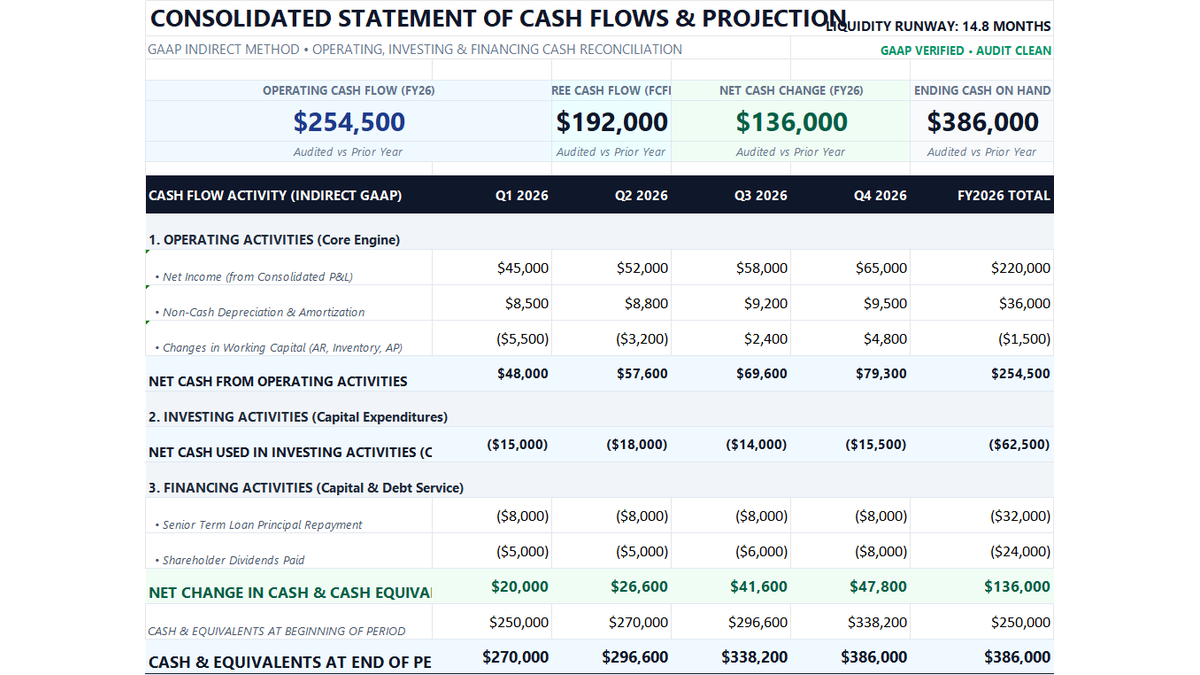
Ready to apply EFFECT & NOMINAL Interest Rate Conversions in a real workbook?
Put professional financial formulas into practice inside an executive cash flow model.
Open 12-Month Cash Flow StatementShare This Lesson
Spread the word with your peers and challenge your friends